


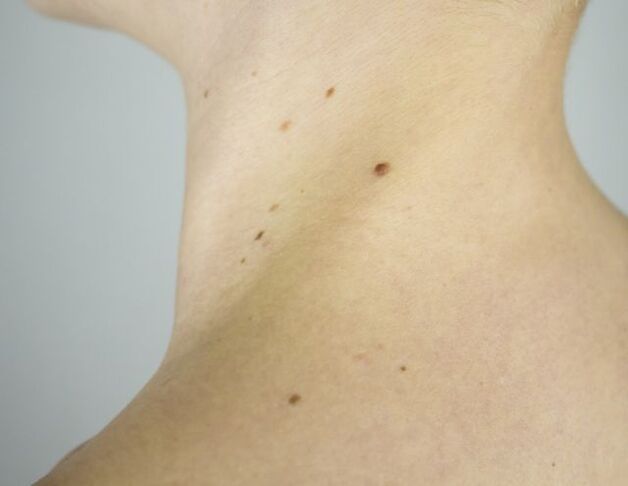
Papillomas on the neck are benign neoplasms caused by the action of viral microorganisms.The pathogen is one of the most common in the world: 70% of the entire population of the planet is infected with various strains of the papillomavirus.A small growth on the neck can cause dissatisfaction with appearance, psychological discomfort and even frustration, and if the growths are located in the area of contact with the tissues, they can be injured, causing constant physical discomfort.Naturally, these tumors must be removed urgently.At the same time, papillomas on the neck are a sign of something more serious, as the virus can remain latent for a long time, and only various dysfunctions in the body will lead to the manifestation of the disease.Therefore, to restore health, you need to keep your skin clean and, if growths appear, immediately begin treating them.
What is important to know about papillomas on the neck?
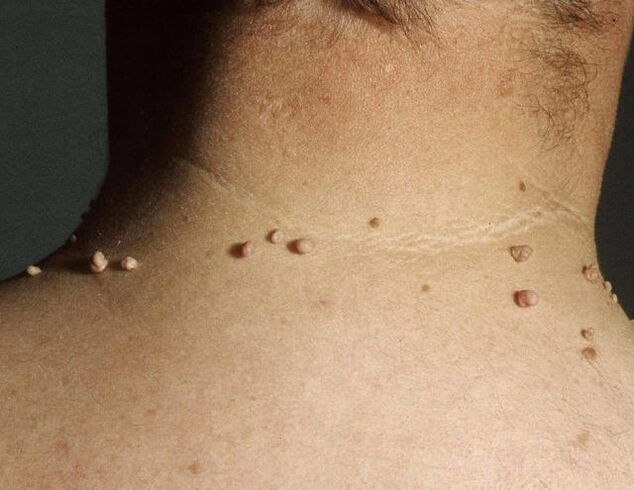
Papillomatosis is a disease caused by a special microorganism that disrupts the normal process of cell division.Incorrect division leads to the formation of a bulge on the skin.However, over time, the papilloma on the neck increases.Neoplasms grow due to the activation of the genotype located in the epidermal cells of the skin in this area.
Pay attention!This disease is typical for women and men and does not depend on age.
The placement of the viral microorganism in the epidermis of the neck is explained by the constant opening of this area.In summer, the skin sweats, becomes dirty and irritated more quickly, and in winter it can be irritated by multiple layers of clothing and scarves.
The human papillomavirus can enter the body even through microcracks.And if the appearance of a small papilloma on the neck and its causes do not particularly worry the patient, then the condition may worsen in the future, for example, the growth affects a large area, or a person accidentally injures the formation (tears it with the corner of his clothes or a piece of jewelry hanging around his neck).
Such structures are classified as benign, but this can only be confirmed through special examinations, which the patient should not neglect.
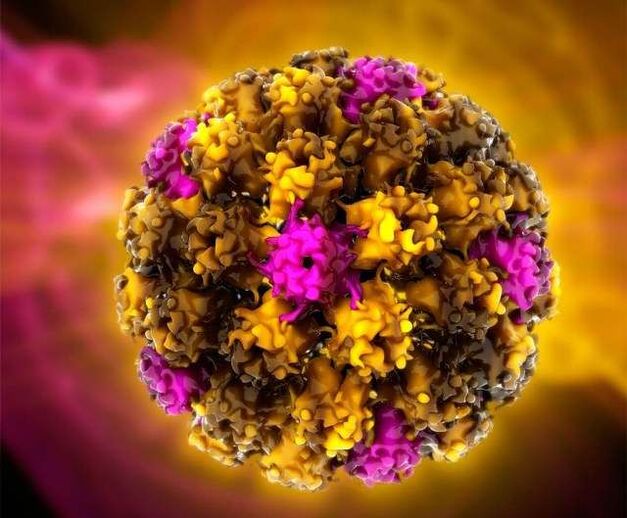
The cause of the appearance of papillomas on the neck is the activity of HPV, which is transmitted mainly through sexual contact.In addition, there are other routes of infection, as clearly evidenced by formations in children and adolescents who have not yet entered puberty:
- Contact and address- when using towels, clothes or other items belonging to a person with the disease;
- Verticals- from mother to newborn while the baby passes through the birth canal, cases of intrauterine infection are unlikely;
- Autoinfection— failure to comply with the rules of personal hygiene leads to the entry of a pathogenic virus into the body.

When studying the mechanism of occurrence of papillomas on the neck, medical theorists discovered that the growths may not appear on the skin for a long time after infection.The latent phase of the disease lasts from several weeks to several months.However, as soon as the protective function of the host's body weakens, the virus begins its damaging effect on the epidermis.
So, the following people are at risk of developing unpleasant skin growths, including papillomas on the neck:
- With weakened immunity due to chronic diseases;
- Leading an unhealthy lifestyle - smokers, alcoholics;
- With dysfunctions of the digestive system and metabolic processes.
Papillomas on the neck, regardless of the cause of their appearance, require treatment.The occurrence of such neoplasms indicates other pathological processes in the body that harm the immune system.
What do papillomas on the neck look like?
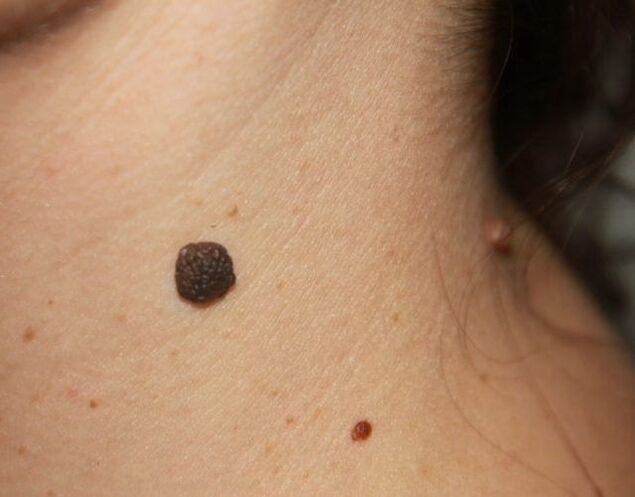
As already noted, the period when HPV does not manifest itself can last a long time.But as soon as the protective properties of the host's body decrease, the pathogen will make itself felt, for example, papillomas will appear on the neck.
At the initial stage of development of the disease, a person may feel slight epidermal compaction.As the pathology progresses, a flat or pointed neoplasm forms, on a kind of stalk.
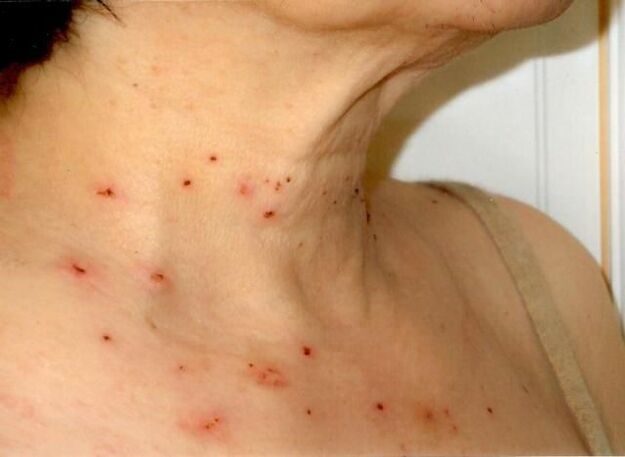
Flat papillomas on the neckprotrude above the surface of the skin by only 1-2 mm, but have a denser structure.The shape can be round or polygonal and the color varies from pulp to light brown.The number of growths only increases over time, and the skin at the site of their formation begins to itch unpleasantly.
Elongated formationsAt first they appear as small lumps on the skin with a yellowish tint.Then its shape gradually extends, forming a kind of “mushroom” on a thread-like stem.
If the papilloma on the neck begins to darken, the skin in the area of the formation hurts, and the structure itself bleeds, immediately contact a specialist.
Pay attention!In the later stages of their development, elongated papillomas on the neck can have a stalk up to 6 mm long.However, this condition can be called an extreme situation.The sooner the patient seeks a specialist, the easier the treatment will be.
Methods for diagnosing papillomas on the neck
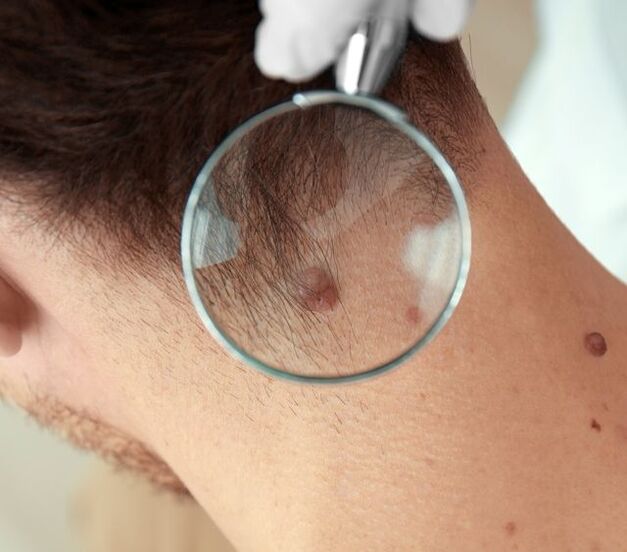
Before deciding how to treat papilloma on the neck, the doctor carefully studies the formation, diagnoses the strain of HPV and selects a therapy that will not only eliminate existing growths, but also help prevent the appearance of new ones.
The doctor must takeformation scrapingto perform human papillomavirus genotyping.The procedure is carried out using modern tests.For example, a PCR test indicates the presence of a virus in the body, and a Digen test can even determine the strain and concentration of the infection.
The removed structures will be sent tobiopsy, because the formations can be malignant.In some cases, a consultation with an oncologist may be necessary.A general diagnosis of the immune system can be performed to determine the cause of the neck papilloma.
In parallel with determining the causative virus, tests are prescribed to study the general state of health -blood and urine.Before choosing a treatment strategy, the doctor must establish the patient's health status - the presence of chronic diseases, infections, inflammatory processes in the body.
Methods for treating papillomas on the neck
Only an experienced specialist can tell you how to treat papillomas on the neck.Today you can choose several ways to eliminate growths - from using medications to surgical operations.Traditional medicine methods, which doctors may recommend as adjuvant therapy, are not excluded.
Drug therapy for papillomas on the neck
When using medications, an integrated approach is important.Immunostimulating drugs will allow you to activate the body's protective function and act on the causative virus from the inside, as well as antiviral drugs.For external use, solutions and patches are used to help remove new structures.
The first aid kit for a patient with papillomas on the neck, the causes of which are known and the treatment prescribed by a doctor, may include:
- Medicines to activate the immune system.
- Ways to fight the virus from within.
- A patch for external use that helps dissolve the keratinized layers of papilloma on the neck.
- Salicylic acid to soften the skin.Perhaps this is the most economical way to combat small formations.The growth is treated with a solution until the formation is completely destroyed.
Removal of papillomas on the neck
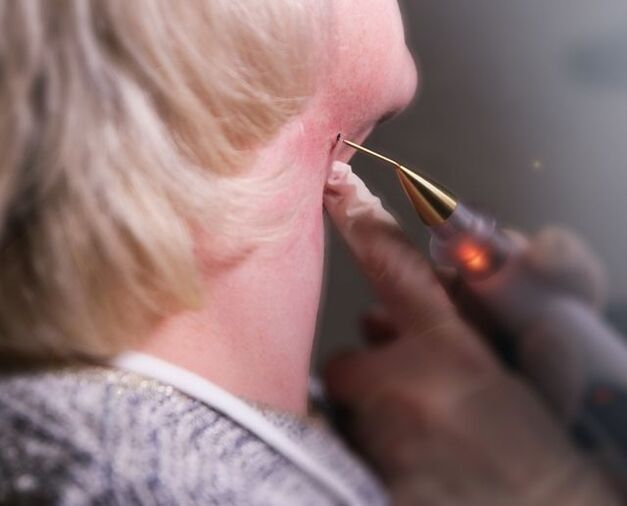
Complete destruction of papillomas on the neck is carried out using modern equipment or using the classical surgical method.Indications for removal may be not only the patient's desire to get rid of an unsightly defect, but also inflammation of the area with neoplasms, bleeding and pain in the area.
The doctor will recommend the removal of papillomas from the neck, based on the patient's general health status, the volume of material to be removed and the results of the analysis.
Methods for destroying neoplasms:
- Laser removal.Using a high temperature tool, buildup is removed layer by layer while healthy areas are left unaffected.The laser minimizes the risk of blood loss.The cost of the operation is quite high.
- Cryoremoval.The papilloma on the neck is treated with liquid nitrogen and the frozen areas are then removed.The procedure requires a long recovery period, but the likelihood of relapse after surgery is low.It may take several sessions to completely remove the tumor.
- Electrocoagulation.Removal is done using electric current;The method is quite painful, but it has proven itself well.It has an affordable price.
- Surgical method.Today it is used very rarely, only in cases where excision of large papillomas on the neck is required.The cost of the operation will depend on the complexity of the work, as well as the anesthesia used.
Pay attention!Under no circumstances should papillomas be removed on your own;if this happens (the growth is accidentally torn off), it is necessary to treat the rupture site and consult a doctor.
Traditional medicine against papillomas on the neck

In folk medicine, there are ways to remove papillomas on the neck.The most common method is cauterization with fresh celandine or dandelion juice.
Additionally, more complex recipes are used:
- Use bandages with Kalanchoe juice for a week;
- Apply an onion soaked in vinegar for two hours to the formation;
- Treat papillomas on the neck with ammonia;
- Lubricate the growth 5 times a day with an infusion of celandine herb and olive oil (1:1 ratio, leave for a month).
Important!Additionally, it is recommended to use restorative and anti-inflammatory agents from lemon balm, nettle and rose hips.
Prevention of papillomas on the neck
Unfortunately, it will not be possible to completely remove HPV from the body.Why?Because pathogenic organisms are firmly embedded in the cellular structure.However, if the patient's immunity is maintained, the disease is unlikely to continue to develop, and after removal, papillomas on the neck will not form again.
Drug, surgical and alternative treatments should also be complemented by simple health measures:
- Monitor your diet - avoid junk food, pay more attention to a healthy diet and normalize your own weight;
- Stay alert and avoid stress;
- Perform a series of simple physical exercises daily;
- Visit the doctor regularly for preventive consultations and, if symptoms of an illness appear, seek an unscheduled consultation immediately.
Following these rules will not only help prevent the recurrence of papillomas on the neck, but also improve the overall quality of life.
Papillomas on the neck are a rather unpleasant phenomenon that, although it does not lead to cancer, still indicates health problems.Timely removal of formations and a series of restorative procedures will allow you to forget about the unpleasant manifestations of the disease for a long time and preserve the beauty of your body.